Thursday, 7 January 2016

First Taste of Africa.


So, a new destination and a new adventure. Some different slants on old stories. Some conquered challenges for them, some new challenges for me, but always challenges. After all, we'll never bring change if we don't face a few challenges. All together, eight leaders, thirty two eager-to-learn carers, all eating, drinking and sleeping maternal and newborn health.
YAY!


This latest trip took me to Kenya. Third time lucky after a couple of cancellations, and the first time for me on African soil. Funded by the Centre for Maternal and Newborn Health at Liverpool School of Tropical Medicine, a retired obstetrician called Richard Kerr-Wilson who is rather more used to African ways, and I travelled out to Nairobi. It was a flying visit (ho ho), whistle-stop tour to deliver obstetric emergency care training, the CMNH way. Packing for way up in the hills (read emergency rations of individually wrapped cheeses and dried fruit/nuts) was quite unnecessary, so I filled my case with more frivolous provisions. I won't go into details here. A lady's case is quite a private affair ( until you get to British Airways security, that is...) but my case was embarrassingly heavy for such a civilized trip.


What did I worry about? I worried what kind of food they'd dish me up, being vegetarian n'all, and whether the accommodation would be isolating or at all scary. I worried how I'd get on with my travel companion, but only slightly, because midwifery depends on the ability to make quick connections, and my companion was a joy to be with. As my flight was the morning after the shootings in France, I worried about the return flight into UK and any security issues developing from that. But so many untoward events have happened just before my flights, and isn't that the safest time to fly?


Nairobi looked quite smart, but we only saw the smart bits, apparently. Our hotel was very nice, and having shared photos with friends, I suspect it's often frequented by UN and UK workers. I'm wasn't sure if all the security barriers made me feel more or less secure. Sharing breakfast with a fellow traveller who grew up in Nairobi, and hearing her stories, was enough to reassure me that security is indeed GOOD.


My first taste of 'Africa' was in the back of a car, through blackened windows. Not wanting to miss ANY of the scenes, I wound the window down and had the warm air whistling around my neck. The great Rift Valley, as it came into view with splashes of sunshine sprawling over it, was like something out of the 'Land Before Time'. It looked amazing, and I valued the reduced responsibility of having to make pleasant conversation with the rather quiet driver.


My first view of wildlife was not really so wild. A small herd of Zebra, and a few baboons sat by the tarmac roadside, with concrete box houses and electricity pylons in the back ground. It didn't quite live up to my expectations. I was mildly disappointed as well, that the shanty areas looked all too familiar to my experiences in other lands. The tidy rows of endless 'garage' size homes, all with TV antennae, were an improvement on the tarpaulin used in Nepal. But had I moved off the track, I suspect findings would have been more disturbing.


Nakuru itself was flat, tidy, and fast flowing, criss-crossed in straight lines like scars (or birth marks, I'm not up enough on the politics and history to decide which) from the army's influence. The town has apparently grown massively in the last few years.


View towards the lake, from my room.


The bed during my stay was comfy enough. There were wonderfully helpful housekeepers. The restaurant was pleasant, although staff were slightly perplexed by their non-meat-eating guest. Neighbouring dogs and passing lorries made for disturbed sleep, at times. I didn't see one mosquito, but a more than adequate net was at the ready (to hang me at any opportunity) and, oh joy, there were no midwife eating spiders. Not even little ones.

My time in the bathroom should have been luxurious given this HUGE relief (and huge caseload of goodies), but the showers were cold or, at best, tepid. When visiting Nepal, I've returned and cried into my hot shower in appreciation of such luxury, and felt so blessed for running water. But I have to confess, as I stepped under that piping hot flow at home this time, I yipped and giggled. The difference? May be no difference, but simply that I'm getting rather spoilt. I only just touched the surface of the struggles in Nakuru. Why should I have expected hot water?


The course accommodation was a rather quirky hotel/ function place. The four breakout sessions after each lecture/ demonstration were held in corners of the same room, and this worked very well. Some of the sessions were specific to Kenya, and I have to say, those Kenyan facilitators were the best people to teach them. I certainly learnt more about HIV protection and aseptic techniques. They have 'hand washing' procedures off to a T.


I loved the impromptu additions of little bit of rhythm and quite a lot of laughter to help drive home the learning. By the amount of leg pulling in my direction, I suspect the team members had never met a 'Veggie', but it was a great ice-breaker and made me lots of friends. The waiters were vigilant in pointing me to my daily source of protein.


Without exception, all participants were there to learn. They weren't just there because they were ordered by bosses to attend. There were some thought provoking (read scarily concerning) moments, and beautiful conversations along the way.


Learning was a two way thing, and with this project, it's measured by testing participants before and after the training, and then visiting the workplace some weeks later, to see what knowledge they have put into action.


Teaching WHO partograph. The guy in the
yellow Tshirt was a Midwife, and extremely
 wrapped up in his 'caseload woman'
Time keeping is always a major issue, especially on the longer training days. It's important for the participants to move swiftly around each of the four work stations, as most stations are allocated just 20 minutes. Anne, our time keeper, had the patience of a saint.


I find teaching the WHO Partograph so rewarding. It's where the real midwifery skills come into play, and emergencies are then avoided. I was impressed with the group's ability to define positions of baby from the presenting part, and their understanding of the three 'P's (power, Passenger, and Passage).


It wasn't any surprise to find myself BANGING on about

….Neonatal resuscitation.

….....Golden minute for baby.

….Encouragement of Mum's own birth hormones.


In this medicalised world of child birth, we don't often enough allow Nature to work FOR us. It should be a basic understanding that if there are limited drugs available to prevent postpartum haemorrhage, you do everything in nature's book to encourage a good maternal hormone response. Yet, we overlook the obvious, or don't get taught it in the first place. Protected time for baby on mother's skin straight after birth will impact on baby (and Mum) for months to come. ABCs of neonatal resus are so simple, but moving onto chest compressions before getting air successfully into the lungs, is pointless, AS is leaving a baby in a wet towel. These things are so simple to perform, when understood.


And, as ever, perineal suturing methods left a lot to be desired (excuse the pun!)


When I travel with the LSTM maternal and newborn health team, I'm providing emergency care training, but I do not believe it can be in isolation from good midwifery. While lectures don't always lend themselves to this, the follow up conversations can explore best and safe practice in midwifery.


This teeny baby, fifth in line to his family throne, was born at 36weeks.
Fast labour. Sent direct to neonatal Unit, to share a resuscitaire in the
 office with three very poorly babies. I think he'll have been fine.


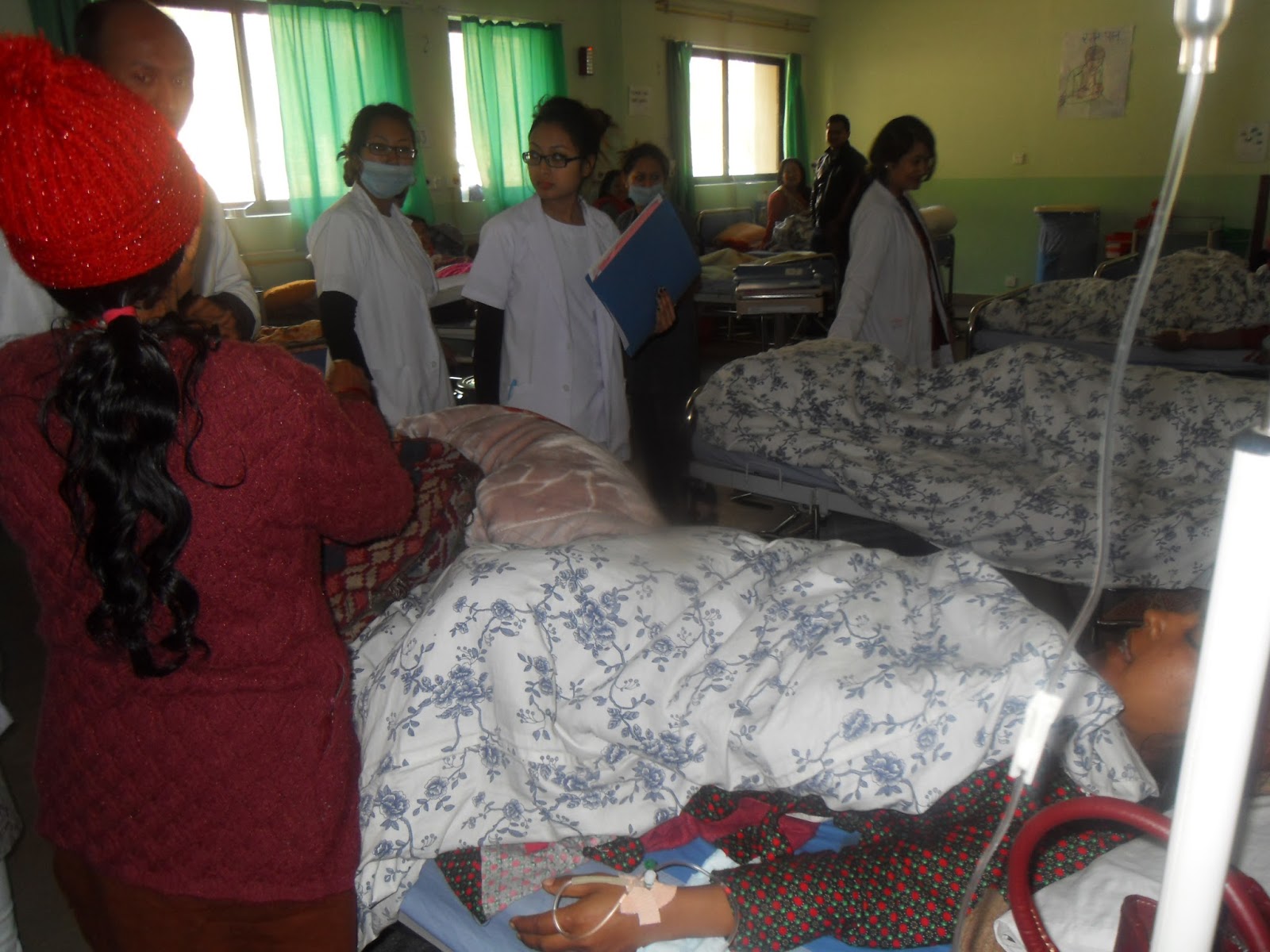
On the last day of the course, Richard and I were lucky enough to be shown around the local hospital. It was sparse, but clean. I felt awe at what they were achieving with such few resources. Two women to a bed, even very poorly women. The delivery area was so cramped for space, even if there were staff for emergency procedures, I'm not sure how they'd fit in. Polythene sheets on a simple couch. All couches facing the door, meaning women were overly exposed. When they had so little, how could I suggest dignity should come into the equation? But it should.


Growth restriction and prematurity seemed to be the order of the day (two themes factoring greatly in the new Sustainable Development Goals), and the maternal mortality rate has started to increase, though they are not sure quite why.
Kenya has managed to reduce it's maternal mortality rates from 584 to 510 in 100,000 (World Bank figures) in just four years (UK figure is just 9, to give you some perspective).


Visiting the neonatal unit was by far the saddest part of my hospital trip. A third of all babies don't go home. Having said that, I saw the most scrummy...and almost healthy...42 day old twins born at 28 weeks gestation. They were having skin to skin time with their mum. That is the most amazing little story. How does that happen? And how are they now? I dearly hope they've made it home.


This is a busy unit, with 25-30 births a day. C section has reduced lately from 15 to 12. That's fantastic news. It worries me what these mums will do next time...and the next time...after section. Hospitalisation isn't the only answer. We need more midwives.


Wish I'd seen this work place before the course. (Take note, LSTM)


And...how could I go to Africa without visiting the parks? On the last day we visited Nakuru lake. I didn't expect the place to be so lush. A fresh carcass showed evidence of lions, but we weren't lucky enough to see them. There were just a few pink flamingo on the lake, because it had recently 'shifted' after volcanic plate movement, and the water was too deep for an adequate algae supply. The flamingo had flown to find tastier soup. We spent quite a while on the boggy peat, among the graveyard of trees and amazing bird sounds. It was incredibly moving, and the peace was breathtaking after such a busy and demanding course.


And then Home. Too soon. Great trip. Such potential for even better obstetrics and midwifery. And such lovely warm people. More friends. More learning.
Thank you.


Monday, 1 June 2015

Sunshine Before the Rain.


This evening, the normal start to my updates REALLY isn't happening for me, or should I admit this is my fourth 'start'?
So, a different course of action is needed. Had I just got down to it and updated my blog like good girls do, when I returned from Nepal at the end of March, I wouldn't now find I have such an explosion of events, and emotions to set into words. My brain is less like sawdust than it was four weeks ago, but I still find the enormity of events on and since 25th April hard to take.

So, I'll talk you through a picture show. That way, I hope there will be some kind of order to my spewing of facts and feelings.


This is the scene that welcomed Sarah, my midwife companion and I to Fulpingkot, Sindhupalchowk, where we spent a short time with the nurse-midwives employed by PHASE Nepal (http://phasenepal.org/). This village, at 1854m, is lower than neighbouring Hagam, where we intended to move on to afterwards, and has a completely different feel to it. I'm pleased to say there were fewer dogs around, and those we met were very friendly. There was an incredibly relaxed atmosphere here. It was such a joy to wake up to baby goats scrabbling up the tiny wooden stairs, and the chuck parading her chicks around the 'patio'.


The bus journey up the hill was uneventful, and we felt pretty used to it by now. We took a translator with us this time. Dipshikha was very useful. Her English was everything we needed to continue our training sessions, and her knowledge and thirst for learning was excellent. She is from a rural background north-west of Kathmandu, so she settled into life with the nurses very quickly (Her family home is damaged and they, too, are sleeping in tents).

This photo was taken on the way up to Fulpingkot. The view was stunning. It'll be somewhat different now. Sindhupalchowk was one of the worst hit areas, and I believe the house we spent our time in has since fallen. Let's hope the monsoon season will be gentle on Nepal this year. if it isn't, increased landslides and flooding will add to troubles.


 The girls were lucky enough to live just a stone's throw from this health post. When there are more than one family in a household, privacy goes out the window. Most UK residents would throw a fit at the door to a GP room being left open, let alone two consultations going on at the same time. But this level of care from the nurses is new to this community, and they are genuinely grateful for their healthcare. I'd say we could learn a lesson from them....in more ways than one. The nurses know all their patients, and practice holistically knowing the family/individual situations.


 We walked quite a distance, on a scorching day, to provide  antenatal care to this woman. If I remember right, it was her ninth pregnancy, she was 40 already, and previously had twins. She had never had skilled support for any of her births, and the nurses Indira and Bedika didn't doubt she would call them this time. It made me question who we are, to label this woman as a high risk grand multiparous aged mother, when the figures in my very own trust suggest at least two of those births should have resulted in C section? Should we encourage hospital when she is so fit and able? Look at her. She has more life in her than most of us will ever read about. BUT she is a mother and, as such, she is precious. She is also lucky. The nurses were prepared for her birth. Her baby was pretty much due when the earthquake struck.

These pics were taken on the highest point of the area, where a Buddhist monastery was four years in making. We had walked to a more remote health post to hold a clinic, and detoured for a spot of 'sightseeing'. The building work was taking so long because of the difficulty getting the materials up the 'hill'. Bad weather and landslides each year mean travel for many villagers is nigh on impossible.

We were treated to tea and biscuits. All the workers put down their tools and brushes, too. The love going into this place was evident. it will be a beautiful, heavenly place to worship when it's completed.

I wondered why, in such a poor and hungry community, so much time and effort would be channeled into one exquisite building, set far away, up a hill, for few to admire. Since the earthquake, I can better understand the need for these guys to nourish their faith.

What of this stunning building, and all their hard work? Can somebody answer, is it still standing?


Back at home, a meeting of community health workers was held to discuss International Water Day. The little pots, in the centre of this pic, are samples from all of Fulpingkot's 'taps'. The water runs close to the surface in this area, and therefore is easily contaminated. Every single sample (except one with filtered water!) indicated fecal contamination. Fulpingkot had not one water source safe to drink from. Filtering is essential, and the community health workers will take this message with them.


A quake of 7.8 is sizable enough to change the course of this water. The dust needs to settle, but maybe this water source will change for the better.


We were honoured to be guests at a wedding that hadn't quite happened. In this community, much celebrating and eating and dancing happens before the man brings his wife home to the family. We were treated to joyous dancing with drums on a scorching hot day. I was grateful of the chairs offered to us as special guests.
We stuck out like a sore thumb, and it wasn't long before they realized we'd not entered into the mood of the party.....yes, we had to dance Nepali style, feeling meters taller than anyone else, heads thumping with heat and dehydration, trying to smile and laugh at ourselves with as much gusto as they were laughing at us. That was almost as challenging as peeing in a spider infested privvy, but it was appreciated more by the locals. We'll be the talk of the party, for quite a time to come.

It was challenging to find any time for the training sessions we had planned. The nurses all have their own chores and down time, as well as their nursing work with PHASE. Having midwives join them for short bursts of time is a new experience. Mostly doctors visit for months at a time, and learning and understanding occurs in a more relaxed and natural style. Until we really buckled down to our sessions (Breech, neonatal resus, eclampsia, shoulder dystocia, postpartum haemorrhage as well as antenatal care and recognition of 'normal') the nurses were a little unsure of what was expected of them.


Because of the difficulty ensuring protected time in this setting, we are considering holding the same programme, but at a venue where we can gather as many nurse-midwives as can be spared, in the Sindhupalchowk area. We shall liaise with PHASE and the Midwifery Society of Nepal (http://www.midson.org/Home.html) to bring everyone together, and make it a social event as well as learning valuable midwifery skills.

It was also the reason, partly, for returning to Kathmandu rather than travelling on up to Hagam. A nurse had fallen sick there, and been returned to a Kathmandu hospital for treatment and rest. We felt, with their reduced staff, on top of any chance for training, our time would be better spent in Kathmandu, working on a greater plan.


As always, the girls were wonderful hosts. The cooking was fantastic, and I was thankful of a smaller breakfast of something other than dahl bhat. Every now and then we weedled our way into doing the tiniest bit of washing up. One could assume they didn't allow us the chore out of politeness towards their guests, but there could have also been a fear of our skills with regard to hygiene and precious water usage!

There was a problem with the local water source drying up, due to a leak higher up the hill, apparently. The girls had a water filter for drinking water safely. I have to admit, though, I was thirsty much of the time as the filter didn't quite meet the demands of this larger group of visitors.
It didn't become evident until later, either, that while we slept at dawn, water was being fetched from a more distant source. Even with a good translator, so much information is lost in conversation.
Electricity and a small amount of internet coverage were good, but there was the usual load sharing. We found the solar charger pack I brought from UK very useful.
With funds from UK, I was able to equip some PHASE nurses with solar charger packs and wind-up head torches. They don't work for ever in these dusty and harsh environments, but while they do, they'll be worth having.


We shared a feast on the last night, of chocolate, nuts and tiny cheese portions. Both Sarah and I really appreciated the girls making us welcome and sharing their very small space with two relatively larger women. Our household worked well together, not least Shushila, one of the nurses, and her bonny babu. The peace and scenery in Fulpingkot is simply breath taking. The whole place, and it's community is beautiful.


This water hole was a short cross country walk away from our home, and where our 'emergency' source came from. After such a (self imposed) meagre volume of water to wash in back at the house, both Sarah and I thought we'd died and gone to heaven as we plunged our heads under the cold flow to wash our hair.
         And the view was even more breath taking. What I wouldn't have done to have found that place earlier, deserted and quiet, to have washed fully and without reservation. No bathroom brochure in the world, with mod con or promise of luxury, will better that place for me. When I write my book 'The World's Most Amazing Places to Greet Your Lover', this will be one of the top ten.


There are many small schools dotted around the countryside, but kiddies still often have to walk miles each day. Some will use the one daily bus up and down the hill. Every effort is made to cram the last man, woman, child, chicken, sack and piece of metal into the rickety old bus, and amazingly everyone is good natured and amused by it.


So, back into Kathmandu, and to network and meet old faces. Oh, and pick up a kurta or three sewn by lovely ladies working near Patan Square.


During my very first trip to Nepal, I was shown an unfinished building in Tribuvan University Teaching Hospital that was to be a Birth Centre. I was only just realizing their idea of a birth centre was very different to mine. We chatted about this new concept, and what would have to happen for it to work. Eventually, after much continued and repetitive input from all, MIDSON and RCM volunteer midwives not least, we have a real Birth Centre. These ladies should be very proud of themselves.


There is so much I want to share with you regarding this wonderful centre, and how things are moving on for midwives in Nepal. The figures for the births that have taken place already, are amazing. These midwives are doing it! And I feel so happy for them.

I can go into more depth later.


It was also lovely to be part of the meeting of MIDSON educated members, to discuss their potential change of premises. Their plans to hold antenatal and women's health clinics are fantastic. Midwifery in Nepal needs to practice what it preaches, and that's incredibly difficult when a doctor is stood over your shoulder waiting to take all power and skill from you.
Here, MISDON hope to work with Paropakar Women's Hospital, just along the road, to provide good quality midwifery services. Being financially independent and therefore free from influence is challenging for a small organization like MIDSON. Much work needs to be carried out on the building, and it will only be given temporarily.

Stop press.....Oh yes, an earthquake happened.


We also managed to fit in a visit to Kirtipur Hospital. Again, during my first visit to Nepal, I was treated to discussions on how to kit out a building planned as a Birth Centre. The building, pictured here with an enchanting tree trunk in the middle of the room, hasn't changed in these years. The C Section rate is high and costly, and there aren't enough beds. Now the TUTH Birth Centre is doing so well, Kirtipur need to move on and open this building. Sarah and I will work on a feasibility study, inclusion criteria, and guidelines for the eager staff to use to convince management this has to happen.


Below, is the current maternity ward.


We also had time to meet up again with Samjhana, a friend I met a couple of years ago while trying to promote White Ribbon Alliance and its Respectful Maternity campaign (http://whiteribbonalliance.org/campaigns/respectful-maternity-care/). I think I mentioned Samjhana in an earlier blog. She does amazing work for women's rights and safety in Nepal. This time, we were able to see her work in action. I'm so proud of her.

This 'Pink Bus' is one of two rented for use on particular routes around kathmandu that have already been identified as risky for women. The aim was to have it driven by women FOR women, but there aren't enough women drivers...YET (Samjhana is sorting it ;-)) The buses are packed with women both morning and evening, and it is welcomed by the men. Most women in Kathmandu have been abused either verbally or physically at some point in time, while using public transport.
It was heart warming listening to the conversation, in Ratna Bus Park, with other bus drivers...all male. They were so supportive of this project, presumably because they've had enough of witnessing the amount of abuse that goes on (They could try giving any abusing male a hasty removal from their bus, eh? Most of the drivers are youngsters, and would need the support of other passengers to be able to carry this out). I made the executive decision to hand enough cash over to get the seats freshly covered on the bus pictured above, after it was agreed they would make a big difference.

Oh, dear lord. All eleven of the buses owned by the company, including the two Pink Buses, were destroyed in the earthquake, along with the owners whole community.


Our trip was incredibly happy and productive. We were so pleased with the amount of work MIDSON had done to move themselves further. The Global Midwifery Twinning Project and RCM had been a huge driving force for them, and many MIDSON members were fearful of what would happen now that the project had ended. I see a ball rolling with so much momentum, that it's not going to stop (even for an earthquake!!) and what I see happening SINCE the earthquake makes me SHOUT FOR JOY.


We took a day out of a very busy schedule to explore the nearest little 'hillock' of Shivapuri (2,700m). Goodness, we needed the space and the peace, just to slow our minds. 25 zillion steps upwards is a kind of walking meditation, though we were almost not walking by the end of them (and we certainly weren't floating). These steps are not significantly different to any of the others. They just kept coming...after every bend....


Finding these stones at the peak, quite obviously also meditating, made me chuckle. I suspect gravity and a bloody huge shake up means they are now sprawled in a horizontal and drunken fashion, waiting for some kind and patient soul to replace order. I also suspect their place in the list of priorities isn't very high.


Tuesday, 5 May 2015

Fun and fund raising for Nepal.

Joins us for a
Practical Crafts Evening.
Beginners welcome.


Thursday 21st May, 7pm til 9.30pm. Kirtlington Village Hall.
Tickets £20.
Select from spinning wool, basic knitting/crochet, woodcarving, pottery, dipping candles, glass/wood painting, patchwork, and making paper lanterns. Tickets include one hour sessions at two work stations of your choice (First come first served), a glass of wine or a cuppa, and nibbles. All materials are included and you’ll have your own masterpiece to take home from each station.
Proceed will go towards
midwifery needs in earthquake stricken Nepal.

Monday, 4 May 2015

Women Bleed. Let's celebrate that.

The  shedding of an unpregnant womb!   What does it mean to us women in UK?

 Messy. Heightened sensitivity. Vulnerability. Excuse for chocolate. ‘Red tent’ luxury. Acceptance of that ‘delicate’ place. Pain.  Need for holding. Emotional support. Acceptance and comfort by our partners. Sex without babies. A need for nice toilets. Emotional needs left sometimes wanting. Slightest upset could reduce us to tears. A quieter day at the office.

Then take this to a developing country...imagine how our needs will find themselves far down the list of importance for those women. What’s likely to be nearer the top?

For some women in Nepal, menstruation will be linked with Chaupadi. Banished to sheds. Not eating off the same plates as family. Not eating enough. No access to the water tap. Isolation. Snake bite and hypothermia. Untouchable and unclean, but also rape by inebriated men if found sleeping alone.


Menstruation is seen as taboo. Nobody talks about it. In 2003, the Nepal supreme law stated Chaupadi was discriminatory and a violation of women’s rights. Despite this law now being in place, the practice is still widely occurring in many rural areas. In urban areas, there is the different problem of washing and drying the protective cloths used. Because of the taboo, drying in public can be difficult. So privacy is at the expense of personal hygiene, and also clean and germ-free materials. Young girls will miss school rather than have the challenges that face them when they’re bleeding. They’ll seek isolated places to pee, rather than use unisex toilets, and rapists know this. Unsafe materials are often used to stem the blood flow.

 There is a distinct lack of health, education, dignity and gender equality. Women in Nepal still have little control over household expenses. Young girls have limited knowledge. More often taboos are passed on before, and instead of, good health information.


So, why do women bleed?

The lining of the uterus sheds to provide a brand new bed for any future baby. We bleed to make our wombs ready for growing a baby. We can’t have babies if we don’t bleed.

End of.

It’s not dirty. It’s not harmful. It’s not infectious. It’s what we do.


Samjhana Phuyal, an inspirational woman I met a couple of years ago while supporting White Ribbon Alliance (http://whiteribbonalliance.org/) has, amongst other worthy causes, funded the start-up of a business making and selling re-usable sanitary pads (http://www.seew.org.np/) Women sell pads to women. Information regarding menstrual hygiene is shared, and respect for this natural monthly process is increased.
Each pad costs 100Nr (65p). To be comfy, each woman will probably want five pads to see her through a period. Washed in soapy water and dried thoroughly in sunlight, they will only need replacing every two years. There is nothing to throw away, and no harmful chemical like disposable pads have. Extra cloth can be used for heavier periods, too. But just as important, hanging them out with family washing on the line to dry in the sunshine, they are a statement.

Thankfully, women bleed!


With funds raised by my kind friends, I bought a whole big bag of pads to give to the APS birth centre in Kalanki. All the women who birth there, will get pads. The Midwifery Society of Nepal (http://midson.org.np/) had samples and leaflets, too. As did another inspirational woman, Ishwori Devi Shrestha, chief nurse at the Ministry of Health and Population. The villages supported by PHASE Nepal (http://phasenepal.org/ ) are recently well informed and have a healthy attitude towards menstrual hygiene and although remote, do not encourage segregation of women during periods.


Here are a few links providing further information on menstrual hygiene and awareness of discriminatory acts.
..and these links, both short film clips, leave little to the imagination regarding the practical and emotional isolation of Chaupadi.


As before, you may need to use the 'anonymous' option to share your thoughts in a message.